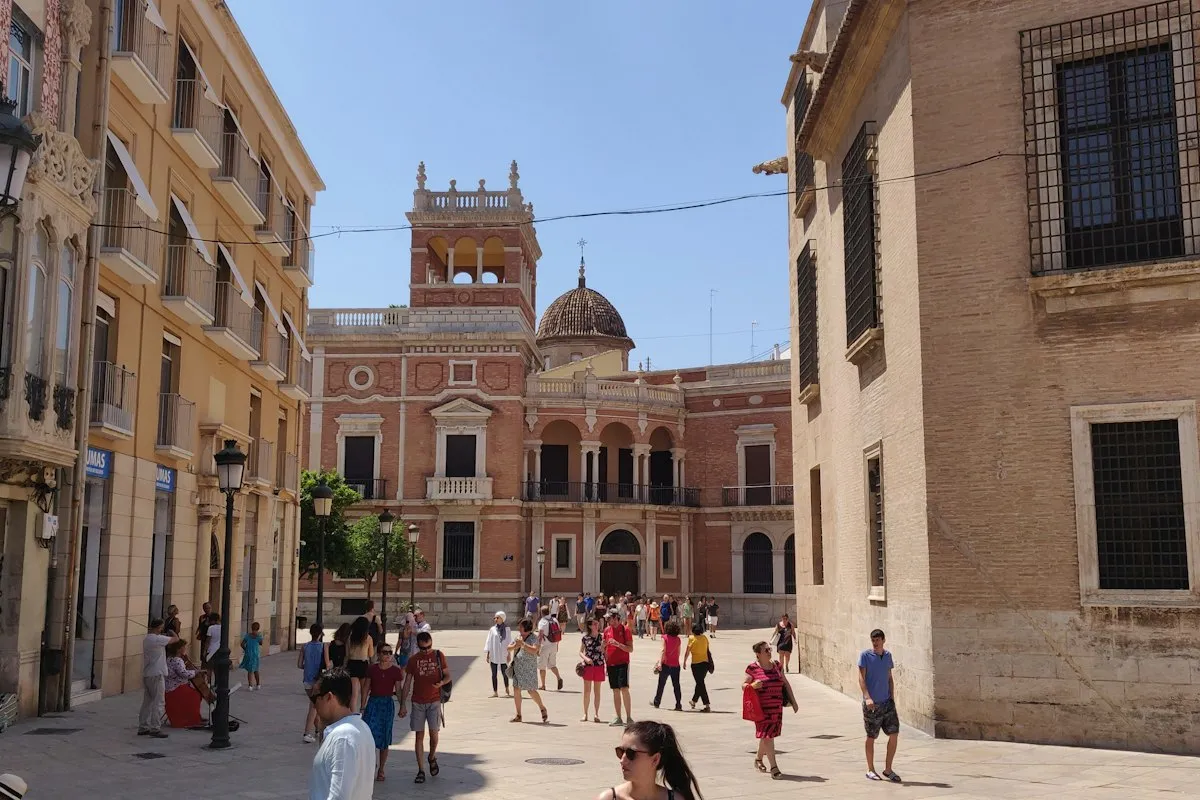
A Smaller Radius: Reimagining Life at the Scale of a Neighborhood
For much of my life, the map of an ordinary week was drawn by distance. Work was over there, friends were somewhere else, groceries were a drive away, and the in-between hours disappeared into getting from one place to another. I didn't question it. That was simply the shape a life took.
Living in Valencia quietly redrew that map for me. Not through any grand decision, but through the slow discovery that a good life can be lived at a much smaller radius than I once believed, and that the smaller circle often holds more, not less.
The Map We Inherit
Most of us never design the geography of our days. We inherit it. We take the job, find the apartment, and then stitch the pieces together with commutes and errands, accepting the distances in between as the price of being an adult.
Moving abroad loosens that inheritance. When everything is new, nothing is assumed, and you begin to notice how much of your old routine was organized around movement rather than meaning. The question shifts from how far you are willing to travel to how close you might allow your life to be.
What Proximity Gives Back
There is a particular kind of richness that comes from living within walking distance of what you need. Errands become small walks. The baker begins to recognize you. The plaza you cross every morning becomes a place you know in every kind of light.
Proximity gives back time, of course, but it gives back something subtler too: texture. When you move slowly through the same few streets, you start to see them. You notice the season changing in the fruit stands, the rhythm of shutters rising and falling, the neighbors who sit outside in the evening. A neighborhood known this way stops being a backdrop and becomes a kind of companion.
The Neighborhood as a Design Choice
Many cities around the world, including much of Spain, were built long before cars set the scale of daily life. Their streets assume you will walk, linger, and meet people along the way. Living inside that older logic is a gentle education in what a human-sized life can feel like.
It has made me think of place as something to design for, not only something to choose. Where we live is not just a matter of square meters or views. It is a decision about what will be near us every day, and therefore about what we will become familiar with, return to, and care about.
Drawing Your Own Radius
You don't need to move across an ocean to reimagine the radius of your life. You can begin wherever you are, with a few honest questions.
What do I actually reach for in an ordinary week? Which of those things could live closer? Which places do I pass without ever entering? Where could I become a regular rather than a visitor?
Sometimes the answer is small: a café within walking distance instead of the one across town, a market instead of a warehouse store, a walk where there used to be a drive. Sometimes it is larger, and shapes the next place you choose to live. Either way, the practice is the same. Draw the circle of your days deliberately, and then fill it with things worth returning to.
A Larger Life in a Smaller Circle
It may sound like a contradiction for someone who writes about global living to praise the small and the near. But I've come to believe the two belong together. The wider the world becomes to us, the more we need a place where we are known, a few streets that hold our footsteps and a handful of faces that greet us by name.
A global life is not only about how far you can go. It is also about how deeply you can arrive. A smaller radius, chosen with care, can be the very thing that makes a big life feel like home.
