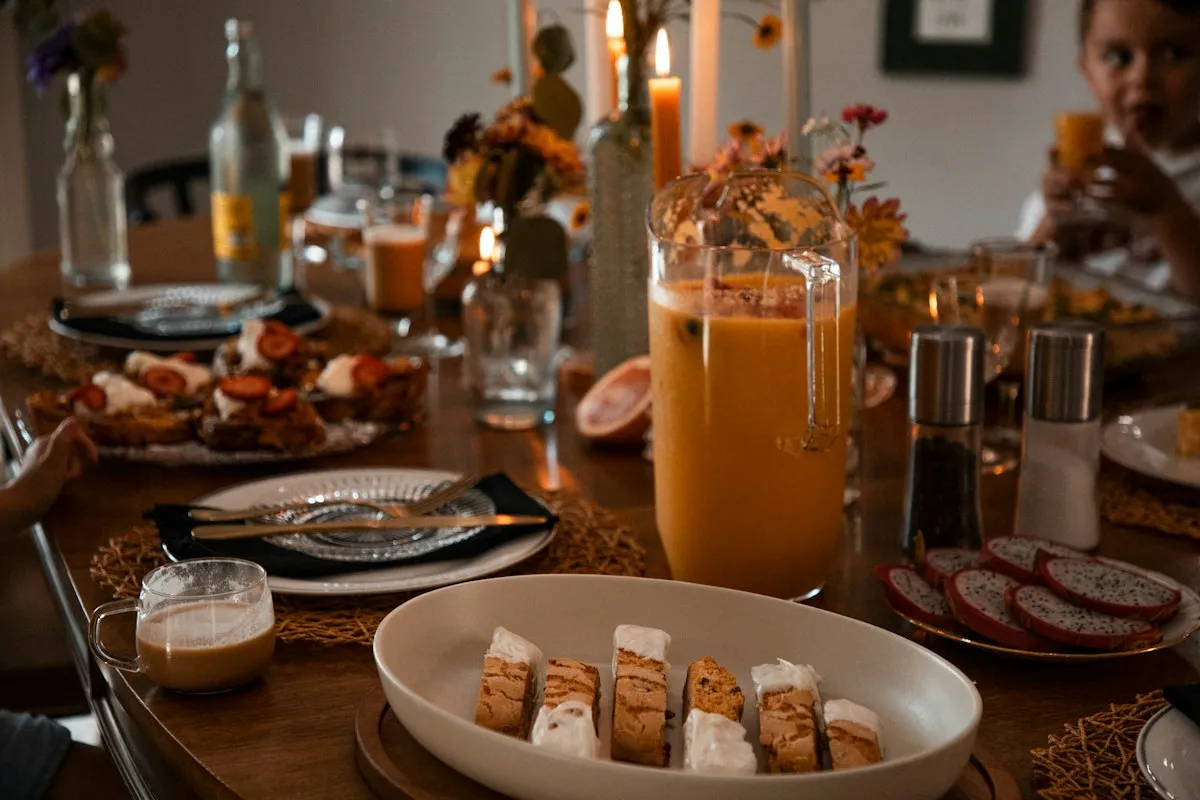
A Wider Table: Celebrating the Holidays Far From Home
There is a particular moment every autumn when the calendar back home starts to tug at the sleeve. The stores there fill with gourds and paper turkeys, the group chats begin to fill with travel plans, and somewhere an oven is being preheated for a dish that has been made the same way for decades. Living abroad, you feel that tug from a distance. The holiday is still yours, but the setting around it has quietly changed.
I have come to believe that this is not a loss to be managed so much as an invitation. When the holidays arrive far from home, the question is no longer how to recreate what you left behind. It is what kind of table you want to build now, and who you want around it.
When the Calendar Doesn't Match
One of the first things you notice abroad is that the days that matter to you are often ordinary days to everyone else. A holiday you grew up treating as sacred falls on a regular Thursday. Schools are open, shops keep their usual hours, and no one around you is in a hurry to get home.
At first this can feel lonely. There is a strange quiet in celebrating something the rest of the street doesn't notice. But that quiet also clears space. Without the pressure of the familiar script, you get to decide what the day is actually for. Gratitude, abundance, togetherness: none of these need a national holiday to give them permission.
The Chosen Table
Expat life has a way of producing remarkable guest lists. The people you gather abroad rarely share a hometown, a first language or a single set of traditions. They are neighbors, colleagues, parents from school, friends of friends who happened to be in town. What they share is that, for a season, they are building a life in the same place.
A holiday meal becomes something different with a table like that. It stops being a reenactment and becomes an introduction. You explain why a certain dish matters, someone else tells you what their family eats in winter, and before long the meal has become a small exchange of histories. The chosen table doesn't replace the family table. It sits beside it, offering a different kind of belonging.
Translating a Tradition
Some ingredients simply don't exist where you live now, or exist only at a price that makes you laugh. This is where the holiday starts to become creative. A tradition, it turns out, is less about a precise recipe than about the feeling the recipe carries.
So you translate. The local squash stands in for the one you grew up with. A regional bread takes the place of the rolls. The dessert becomes something your guests recognize from their own childhoods. What emerges is a hybrid, a meal with an accent, and often it ends up meaning more than the original because it was made with intention rather than habit.
Inviting Others In
One of the quiet joys of celebrating abroad is that you become a host of your own culture. Many of the people you invite will be experiencing your holiday for the first time. They will ask questions you have never had to answer. Why this food? Why this day? What are we supposed to say before we eat?
Answering those questions is a gift to yourself as much as to them. It makes you look again at traditions you have taken for granted, and decide which parts you want to keep. And the invitation flows both ways. When you open your table to others, you are far more likely to be invited to theirs, to the festivals and feast days that fill the local calendar and that you might otherwise have watched from the outside.
Holding Two Places at Once
None of this means the longing disappears. There will still be a moment, maybe while setting the table or answering a call from across an ocean, when you wish you could be in two places at once. That feeling is part of a life lived between homes, and it deserves room rather than resistance.
What I have learned is that both things can be true. You can miss the table you came from and still love the one you have made. You can carry the old traditions forward while letting them change shape in new hands. The holidays abroad are rarely the holidays you remember. Very often, they become the holidays you will remember.
So as the season approaches, set the table a little wider than feels necessary. Invite the neighbor, the newcomer, the friend who has nowhere else to be. Cook what you can find. Explain what it means. Then sit down together and let the evening become whatever it is going to become.
