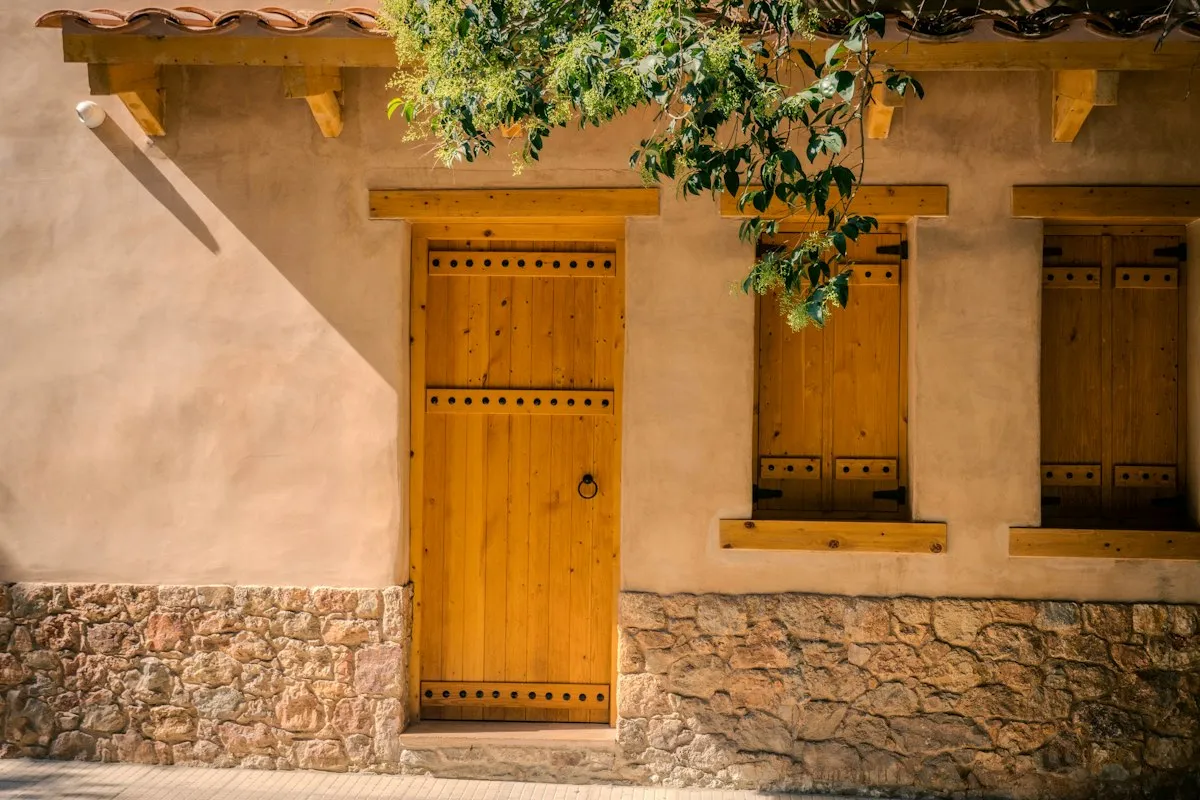
Borrowed Color: Bringing the Palette of a Place Into Your Home
Every place has a palette, though you rarely notice it until you have been away from it. The color of old plaster in late afternoon. The blue a town has agreed upon for its shutters. The particular green of a hillside in a dry season, nothing like the green you grew up calling green.
When you live abroad, you begin to see these colors as a kind of language. They say something about the light, the earth, the materials close at hand, and what people have decided is worth looking at every day. And at some point, the urge arises to take some of that language home.
I think of this as one of the gentlest forms of making. It needs no studio and no special training. It only asks you to look carefully, and then to choose.
Color Is Mostly Light
The first lesson is usually a humbling one. The shade that glowed on a wall in one country can look flat and strange in another. Anyone who has carried a bright ceramic bowl across an ocean knows the small disappointment of unpacking it under a different sky.
That disappointment teaches something worth knowing. Color is not a fixed property of a thing. It is a conversation between a surface and the light that falls on it. Northern light cools and flattens. Strong southern sun can take a color that would shout indoors and make it seem perfectly at ease.
So the aim is not to reproduce a place exactly. It is to understand what that color was doing there, and to find what will do the same work where you are now.
Keeping a Color Notebook
A palette is easier to carry when you have paid attention to it first. You might keep a small notebook of the colors that stop you: a torn scrap of wrapping paper, a pressed leaf, a thread pulled from a worn textile, a quick wash of watercolor mixed on the spot and labeled with where you stood.
Photographs help, but they tend to tell you what a place looked like rather than what it felt like to see it. Mixing a color by hand, even badly, forces a more honest kind of looking. You find out that the wall you called white holds some yellow and a little gray, and that the sea was never really one color at all.
Over time, the notebook becomes its own quiet record of where you have been. It may also reveal something unexpected: the colors you keep returning to, whatever the country.
Bringing It Indoors
Home is where all this looking finally gets to be used, and it rarely calls for anything dramatic. One painted door can hold a whole coastline. A linen tablecloth in the right faded ochre can change the mood of a meal. A shelf of mismatched dishes, chosen over years, can become a map only you know how to read.
Natural materials tend to carry a place more faithfully than paint alone. Clay, wool, unbleached linen and wood all bring their color with a texture attached, and they age in a way that feels alive. They are also forgiving, which matters when you are working by instinct.
A good rule is to begin small. Live with one color for a season before adding another. See how it behaves in the morning and how it settles in the evening. The room will usually tell you what it wants next, if you give it time.
A Home That Remembers
There is a difference between decorating with souvenirs and building a palette from what you have truly seen. The first announces that you have been somewhere. The second lets the place work on you, and on everyone who comes to sit at your table, without any explanation at all.
As a US-born expat, I have come to think that a home assembled from many places doesn't need to resolve into a single style. It can hold more than one sky. The terracotta can sit beside the deep northern blue, and the combination will belong to no country except the life that brought them together.
That, to me, is the real pleasure of borrowed color. You are not copying a place. You are keeping up a long conversation with it, one wall, one bowl, one length of cloth at a time.
