Learning the Light: How a New Place Teaches You to See
Every place has its own light. You don't notice it at first. You arrive with your suitcase and your lists and your jet-lagged eyes, and the light is simply there, doing its quiet work in the background. But stay long enough and it begins to speak to you. It tells you when to wake, when to rest, when to step outside and when to close the shutters. It becomes one of the first teachers a new place offers, and one of the most patient.
Living far from where I was born, I have come to think that learning the light of a place is its own kind of arrival. Not the arrival of the passport stamp, but the slower one, the arrival of the senses.
The Light You Bring With You
We all carry a light from home. It lives in memory as the color of a particular afternoon, the length of a winter evening, the way the sun falls across a familiar street. We rarely think of it as something specific, because for most of our lives it is simply how the world looks.
Then we move, or travel slowly, and suddenly the world looks different. The shadows fall at a new angle. Colors seem louder, or softer. Midday feels longer or shorter than it should. It can be disorienting in a way that is hard to name. Part of the strangeness of being somewhere new is that your eyes are still calibrated to somewhere else.
Letting the Day Rearrange Itself
The light of a place shapes how people live in it. Where the afternoon sun is strong, the day often bends around it, with life moving indoors and slowing down, then returning to the streets as the heat softens. Where winters are dim, life gathers around lamps, kitchens and long conversations inside.
These rhythms can feel inconvenient at first. We try to impose the schedule we brought with us, and the place gently resists. But there is a quiet wisdom in letting the light reorganize your day. When you walk at the hour the locals walk, sit in the shade when they sit in the shade, and linger outdoors when the evening turns gold, you begin to live with a place instead of against it.
Seeing Color Again
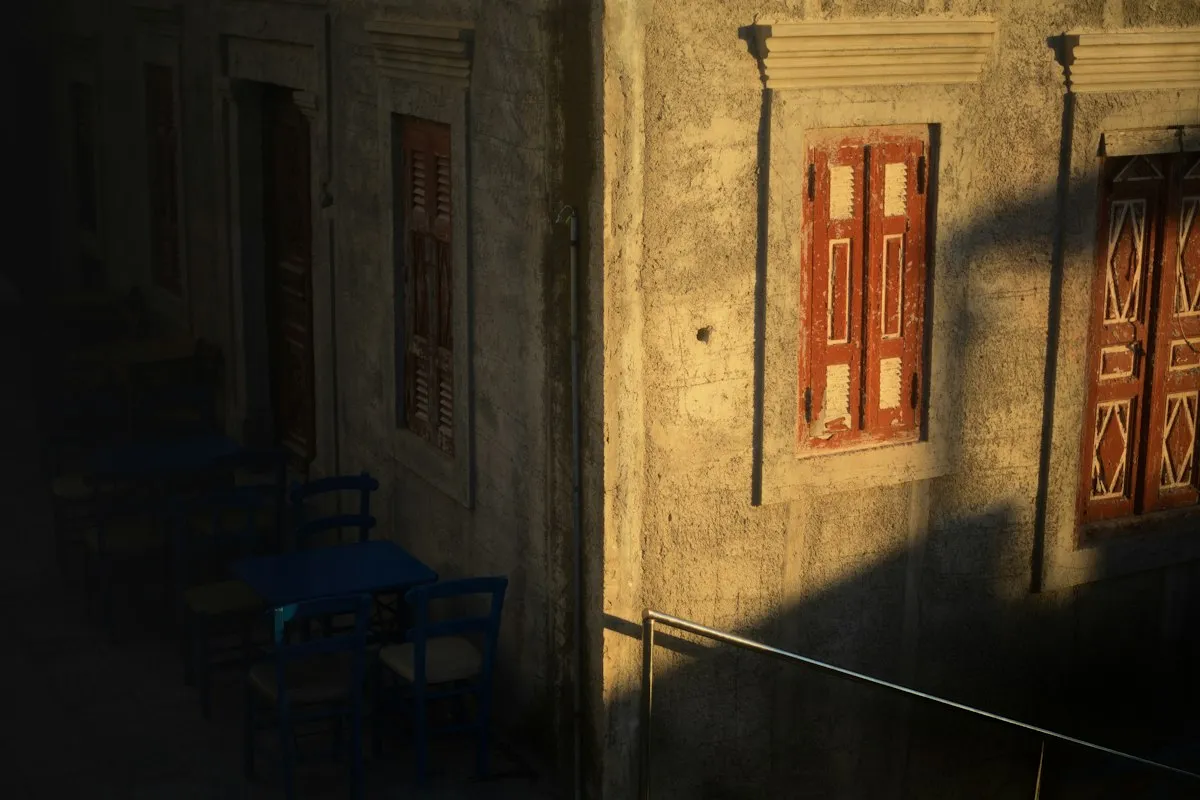
One of the gifts of a new light is that it makes you look again. The familiar becomes unfamiliar. A white wall is no longer simply white; it is cream in the morning, blinding at noon and rose-colored at dusk. The sea changes its mind a dozen times a day. A plate of oranges on a table can stop you in your tracks.
It is no accident that so many painters, photographers and writers have traveled in search of light. A different sky asks you to pay attention. It reminds you that seeing is not passive. It is a practice, and like any practice, it deepens with time and care.
The Hours That Belong to a Place
Every place seems to have an hour that belongs to it most fully. For some cities it is early morning, when the streets are washed and the air is cool. For others it is the blue hour after sunset, when windows begin to glow and the day exhales.
Finding that hour is a small and beautiful project for anyone new to a place. It asks nothing of you except attention. Step outside at different times. Notice when the light feels most generous. Notice when the people around you seem most at ease. Often those two moments are the same, and in them you can feel the character of a place more clearly than in any guidebook.
When the Light Starts to Feel Like Yours
There comes a moment, unannounced, when the light of a new place stops feeling foreign. You wake and know the time without checking. You reach for the shutters at the right hour. You find yourself reading the sky the way you once read the sky at home.
That moment is a quiet marker of belonging. It doesn't mean you have forgotten where you came from. The old light stays with you, folded into memory. It simply means you now carry two, and perhaps more, and that your way of seeing has grown wider for it.
So if you are newly arrived somewhere, or dreaming of a life elsewhere, I would offer this small invitation: watch the light. Let it teach you the shape of the day. Let it slow you down and wake you up. Of all the ways a place can welcome you, this may be the gentlest, and the one that stays with you longest.
