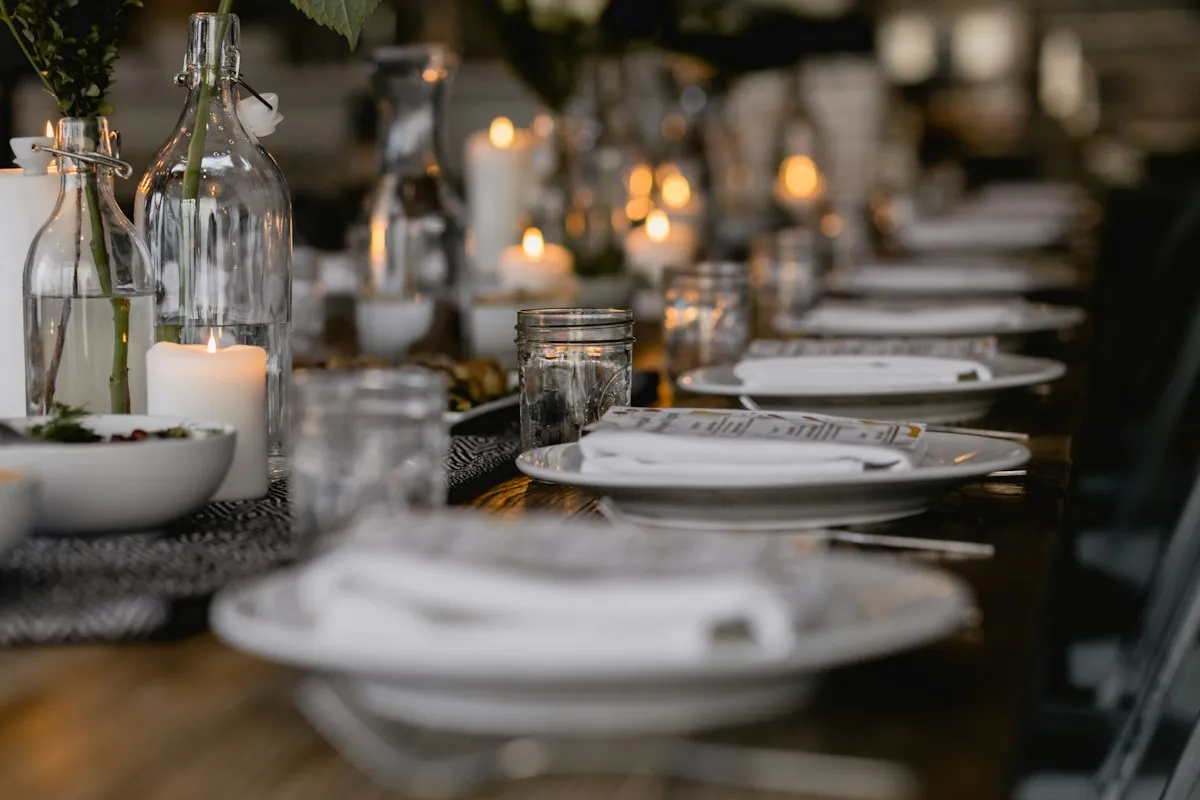
Many Tongues, One Table: Gathering Across Languages
There is a particular kind of table that only exists when you live far from where you began. Around it sit people who grew up in different alphabets, who learned to say thank you in different ways, who reach for bread with different expectations of what comes next. Not everyone at the table shares a first language. Sometimes no two people do.
As an American who has made a home abroad, I have come to love this kind of table, and to think about what it asks of us. Gathering across languages is not a lesser version of gathering. It is its own art, with its own quiet rules.
When Words Run Out, Something Else Begins
We tend to imagine that conversation is the heart of a good evening: the clever story, the long debate, the joke that lands. And when language is shared, it often is. But when it isn't, the evening reveals what was holding it together all along.
It is the passing of dishes. The refilling of a glass before anyone asks. The way laughter travels faster than translation, so that a table can be laughing together at something only half of it understood. Attention, it turns out, is a language nearly everyone speaks.
There is relief in this. You do not have to be fluent to be a good guest or a good host. You have to be present.
The Generosity of Slow Speech
A table of mixed languages moves at a different pace. Sentences are shorter. People pause to search for a word, and someone else offers one, and the offering becomes part of the conversation. Meaning is built together rather than delivered.
I have come to see this slowness as a kind of generosity. When everyone speaks a little more simply, no one is left performing. The quickest wit in the room no longer runs the evening. The quiet person, the one still learning, the one listening hardest, has room to arrive.
If you are hosting, you can set this tone. Speak a little more slowly than feels natural. Ask questions that can be answered in a few words, then follow where they lead. Let silence sit without rushing to fill it.
Small Bridges Make the Evening
A few simple choices can make a multilingual gathering feel easy rather than effortful.
Seat people thoughtfully, placing someone who moves between two languages near those who might need a gentle bridge. Choose food that invites sharing, the kind of dishes set in the middle and passed around, so that hands are busy and there is always something to talk about. A dish with a story behind it, from anyone's home, gives the table a ready subject.
And welcome the borrowed word. A table of many languages naturally becomes a patchwork, with a phrase from one tongue and a gesture from another. Rather than apologizing for the mix, enjoy it. Some of the best evenings end with everyone having learned a new word for something delicious.
Being the One Who Doesn't Understand
Every expat knows the other side of this table, too: sitting in a lively conversation that moves just slightly too fast, catching every third word, smiling at the right moments and hoping they are the right moments.
It is humbling, and it is also instructive. Being the one who doesn't understand teaches you how to host the one who doesn't understand. You remember how much a single question directed your way can mean, how a neighbor's quiet summary can bring you back into the room, how grateful you are for patience.
Those memories become a kind of hospitality you carry with you. You learn to look around the table for whoever has gone quiet, and to find a way to invite them back.
A Table Is a Language of Its Own
Perhaps the deepest lesson is that gathering is itself a language, older than any of the ones we speak. Food, warmth, an open chair and an unhurried evening are understood almost everywhere. They say: you are welcome here, there is enough, stay a while.
When people from different places sit down together, they are not only bridging their languages. They are speaking this older one, fluently, all at once.
So set the table, even if you worry about the words. Invite the neighbor whose language you are still learning, the friend of a friend newly arrived, the colleague far from home. The conversation may be slower, simpler and full of gestures. It will also be one of the most generous evenings you know how to give.
