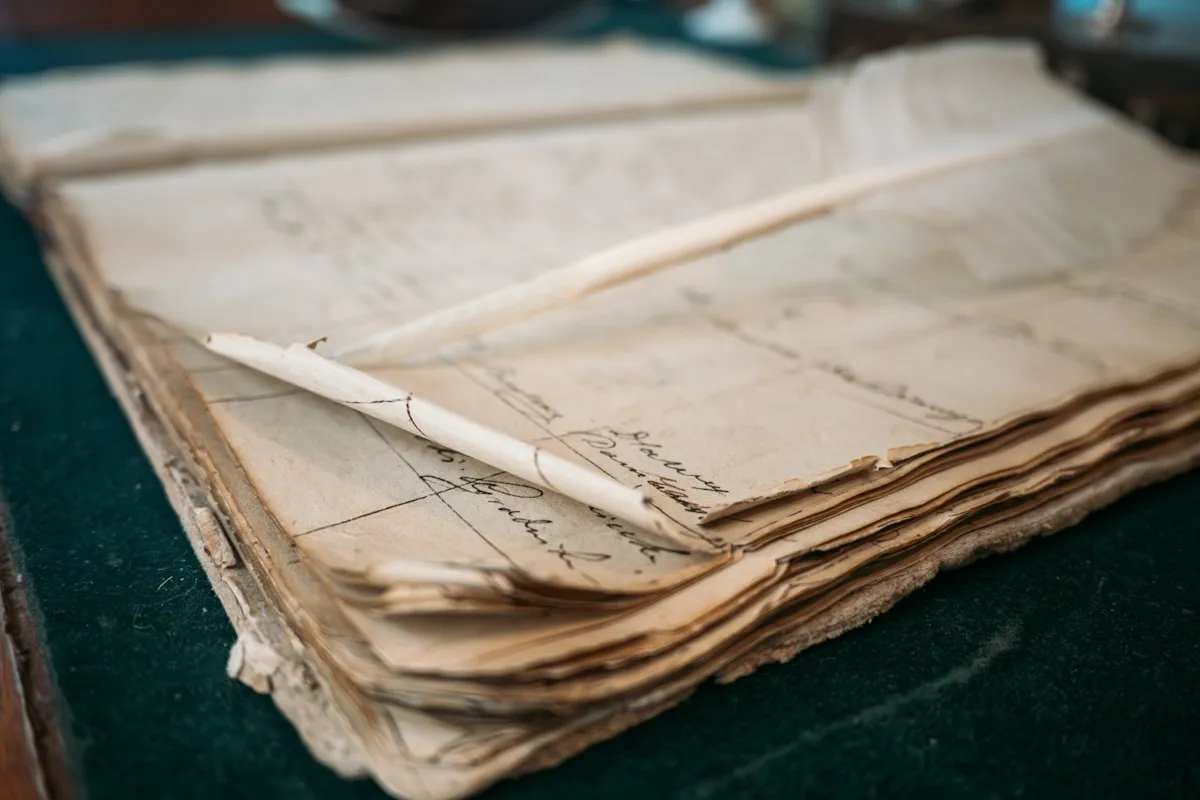
The Folder: On Paperwork, Patience and Belonging Abroad
No one tells you, when you dream of living abroad, how much of that life will take place in waiting rooms.
The dream comes with terraces and morning markets, with a language slowly loosening on your tongue. It rarely comes with the folder. Yet every person who has built a life in another country knows the folder: the copies of copies, the stamped pages, the form that requires another form. I have come to think of it as one of the truest parts of the whole experience, and one of the least discussed.
The Life Behind the Photograph
There is a version of international living that photographs beautifully, and it is real. But it rests on a quieter layer of ordinary tasks: learning how things are registered, renewed and paid for in a place whose systems were never built with you in mind.
At home, most of this knowledge arrived without your noticing. You absorbed which office handled what, how long things tended to take, and what tone to use at the counter. Abroad, none of it can be assumed. Each small errand becomes a lesson in how a society organizes itself.
That can feel exhausting. It can also, if you let it, become strangely interesting.
Every System Is a Portrait
A country's paperwork tells you something about what it values. Some places trust a signature, others a stamp. Some prize speed and screens, others insist on a person, a window and a conversation. Some expect you to arrive with an appointment; others expect you to arrive with patience.
None of this is a footnote to culture. It is culture, in its working clothes. The way a place asks you to prove who you are and where you live reveals how it thinks about trust, about time, and about what it means to belong.
Once I began to see it that way, the frustration did not disappear, but it found some company. Curiosity came and sat beside it.
The Practical Art of Being a Beginner
Much of what helps is humble. Keep a good folder, and a digital twin of it. Arrive early, and bring more than you were told to bring. Learn the handful of polite phrases that open a conversation properly, because courtesy travels further than fluency. Ask the people who went before you, and take their advice as a starting point, since rules and experiences change. When something truly matters, ask a qualified professional rather than the internet.
Most of all, leave room in your day. An errand abroad is rarely just an errand. Plan as though it might take the whole morning, and if it does not, you have been handed a gift: an unexpected coffee in a neighborhood you might never have visited otherwise.
Being a beginner again is humbling, especially for those of us accustomed to knowing how to get things done. There is a particular tenderness in being an accomplished adult who must ask, slowly and with an apologetic smile, which line she should be standing in.
What the Waiting Teaches
Waiting rooms are great equalizers. Everyone there has come for something they need and cannot hurry. Sit in enough of them and you begin to feel a quiet solidarity with the others holding their folders, each of them trying, in their own way, to make a place for themselves in the world.
You also learn something about your own pace. So much of modern life has trained us to treat delay as failure. Life between countries offers a different education. Some things unfold on a timeline you do not control, and your task is simply to remain prepared, courteous and at ease while they do.
That is not a small skill. It carries into everything else.
Belonging, One Stamp at a Time
We tend to imagine belonging as a feeling: the moment a neighbor greets you by name, or a street begins to feel like yours. Those moments are real, and they are lovely. But belonging also has a plainer side. It is built from the unglamorous proof that you are here, that you intend to stay a while, and that you are willing to do what being here asks of you.
So I have made a kind of peace with the folder. It is not the romance of this life, but it is part of the devotion. Every form completed is a small way of saying to a place: I am not just passing through. I am taking you seriously.
And when the last page is finally stamped, and you step back out into the light, the afternoon is still there waiting for you. It tastes a little sweeter for having been earned.
